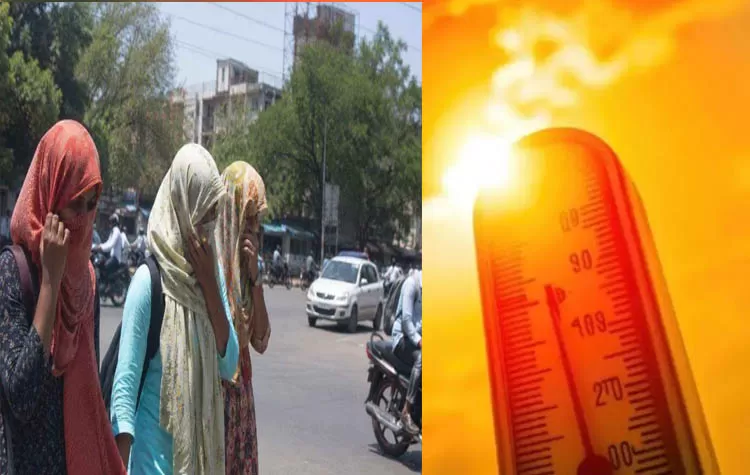

A strong heatwave is affecting Andhra Pradesh, with temperatures still climbing across most of the state. Right now many districts are seeing dangerous daytime conditions, and the humidity makes it feel even more unbearable ,like a blanket. Officials have told residents to stay indoors during the busiest afternoon hours, and to follow heat safety steps quite carefully, especially when the sun is at its harshest.
The Disaster Management Agency said this extreme weather may go on for at least another four days. Authorities advised people to avoid going outside between 11:00 AM and 4:00 PM unless it is really unavoidable. At the same time, health officials are getting hospitals and emergency services ready for heat-related problems.
On Wednesday, several districts in Andhra Pradesh recorded very high readings. Piduguralla, in Palnadu district, noted 47.6 degrees Celsius, and it was the top temperature seen in the state so far this summer.
Temperatures over 45 degrees Celsius were reported in 11 districts. Also, more than 204 mandals across 18 districts logged readings above 43 degrees Celsius. Taken together, these numbers point to a steadily increasing intensity of the summer heat in the wider region.
The situation in Piduguralla shows just how severe conditions are becoming in inland areas. Weather experts suggested dry winds, combined with continuous heat accumulation, are pushing temperatures to risky levels.
People in the affected localities said it has become hard to work outdoors during the afternoon. Many residents have adjusted their everyday schedule, so they can reduce direct sunlight contact, and avoid the worst hours.
This heatwave is spreading through multiple parts of Andhra Pradesh. Places in coastal regions and in the central belt are seeing particularly high daytime temperatures, while inland pockets remain the most affected.
Officials said humidity levels are also going up, and that’s adding to discomfort, especially in cities, and areas near the coast. When heat and humidity show up together it can raise the chance of dehydration and even heat exhaustion, yes it can.
The Disaster Management Agency has sent out warnings for hundreds of mandals across the state. Severe heatwave situations are expected in 74 mandals , while another 232 mandals could see regular heatwaves.
Authorities expect temperatures in the 45 to 47 degrees Celsius range in districts such as:
In parts of Vizianagaram and Markapuram, temperatures may hover between 44 and 45 degrees Celsius. Meanwhile, districts including Visakhapatnam, Nellore, Nandyal, Anantapur, Tirupati, and Kadapa are likely to sit around 40 to 43 degrees Celsius.
Weather officials said this sharp temperature trend should keep going through Friday, and Saturday too.
Meteorological agencies warned that heat intensity might climb again in the next few days. Dry weather, along with strong summer winds, is helping the heatwave last longer.
Experts are telling people to keep an eye on local weather alerts , and to cut down on needless commuting during the daytime hours.
The ongoing heatwave has already started impacting public health in multiple districts. Reports of heatstroke are increasing as temperatures keep climbing higher.
Recently two deaths tied to heatstroke were reported.
In Agrahara village, in Jaggayyapeta Mandal of NTR district, a toddy tapper named Darla Krishna, aged 50, reportedly passed away after suffering from heatstroke. In Krishna district, a tenant farmer, Kunapareddy Ramakrishna, aged 53, collapsed while working in the agricultural fields and doctors say it happened during the extreme weather.
Outdoor workers stay among the most at risk people when temperatures go very high, especially during heat waves.
Doctors said that a long stretch under high temperatures can bring dehydration, dizziness, exhaustion , and even heatstroke. People who are older , kids , and those who already have health problems are facing bigger dangers.
Health experts suggested drinking water again and again, using light clothing and trying to avoid direct sun exposure, particularly in the afternoon peak.
The Andhra Pradesh government has begun emergency preparations to handle the effects of the heatwave.
Health Minister Satyakumar Yadav met senior officers at the Secretariat on Wednesday and he asked all health services—from Ayushman Arogya Mandirs to teaching hospitals—to stay fully prepared to treat heatstroke cases.
Officials instructed hospitals to increase readiness for emergency admissions connected with extreme heat. Medical staff were also told to spread awareness about heat safety habits.
As per Health Secretary Saurabh Gaur, the state recorded 325 suspected heatstroke cases between March 1 and May 19.
The government is also relying on the AWARE monitoring system to watch temperature patterns and share district-level warnings. The idea is to give early notices, so residents can take precautionary steps before conditions worsen.
The Health Department also said that 1.44 crore ORS packets have been kept across Andhra Pradesh, to back hydration efforts during the heatwave, sort of a direct support move.
Temperatures rising in Andhra Pradesh seem to match a bigger trend too, with longer and tougher heatwaves showing up in many areas of India. Climate experts point out that harsh weather happenings are turning more common because climate conditions keep shifting.
Warmer land surfaces, rainfall patterns that keep changing, and extra urban heat build-up are all part of the reason summers are getting hotter. Also, when there are long stretches without rain, the ground-level heat can climb even higher.
Scientists are still tracking how climate change is reshaping seasonal weather in South India, piece by piece.
Right now, these temperature conditions are hitting farming, transport, and general outdoor work. People in agriculture, construction, and roadside roles are getting the toughest exposure to direct heat.
If the heatwave goes on, schools, local shops, and public services could also see slowdowns or interruptions.
Public health officials are urging people to do simple things that can cut heat-related danger.
Residents should :
Staying hydrated is still one of the most reliable defenses during extreme temperature conditions. Those working outdoors should take short, frequent pauses, and not keep getting hit by the sun continuously.
Families are also encouraged to check on elderly relatives and vulnerable individuals during periods of high heat.