
Stampede At Vijay Sabha In Karur Overcrowding And Heat Conditions Analyzed

Karur Tragedy

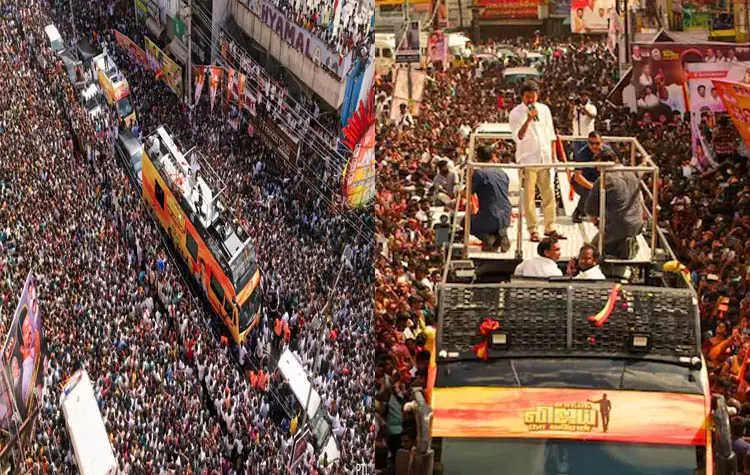
A stampede took place during the roadshow by Tamil Vetri Kalagam leader and actor Vijay at Karur in Tamil Nadu on September 27. Around 41 people died and over 100 got injured in the incident with several succumbing to their injuries later.

According to Bhuvulagin Nanbargal, a Chennai-based environmental NGO, such huge gatherings in confined spaces may raise local temperatures and amplify global warming. By using its own designed Punal framework, the organisation studied the climatic impact of the event. Data from Google Earth, IMD, thermal analysis tools, 3D radiation models, and thermopsychological models were also drawn upon.

Heat and Environmental Data

Researchers based their evaluation on data from the Universal Thermal Climate Index, which calculates temperature and heat stress. Prior to Karur, Vijay had organized a similar rally in Namakkal with no significant incidents. However, the venue in Karur did not have proper exit routes, and the intersection was packed with over 20,000 people.

The people who had to wait for hours also faced a shortage of food and water, and they were not provided with any appropriate shade. The place selected to hold this event was not at all safe because the area was small and not well-ventilated.

High temperatures with no air circulation

  • Official figures put the number of people at 27,000, other estimates as many as 50,000. The crowd density was over four people per square meter, generating upwards of 1,000 watts of energy per square meter—well above the 800 watts usually generated from direct sunshine at noon. In all, around 12 megawatts of heat energy were generated across the 19,000-square-meter space.
  • Cooling systems failed during the event. Though the average wind speed in Karur was about 5 miles per second, it was less than 1 mile per second inside the venue. There was also a rise in humidity levels by 5 to 10% that increased the heat stress.
  • From 11 a.m. to 5 p.m., the temperatures rose above 38°C, reaching 40–42°C at 2:30 p.m. After waiting six hours in that kind of temperature, many people had fainted or felt weak. A mother and child had apparently died before Vijay arrived, possibly because of the heat.
  • Above 38°C, the risk of heatstroke starts according to UTCI standards, while above 46°C it is fatal.

Similar Incidents and Climate Impact

Such incidents have also been reported at the Puri Jagannath Yatra, Kumbh Mela, New Delhi Railway Station, RCB Vijay Yatra in Bengaluru, and outside Pushpa Cinema Hall in Hyderabad, due to crowding and gradually rising temperatures. People fell unconscious or suffered heat stroke in these situations. Environmental researchers say these events also contribute to local heating and global warming.

Recommendations from Bhuvulagin Nanbargal

The NGO had several suggestions for averting such tragedies in the future:

  • Permit large public gatherings only after consultation with weather experts.
  • Install cooling systems or create shaded areas to lower heat levels.
  • Avoid daytime road shows during the months of February to October where the heat is high.
  • Provide water and shade for participants in events of long duration. Events that need people to wait in open areas for several hours should be postponed or canceled.
Recent Posts
Join With Us
SAS TV YouTube Channel