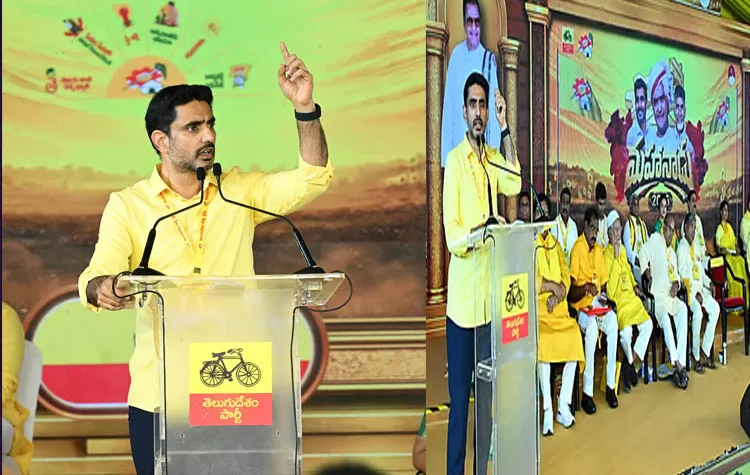

Nara Lokesh, at the TDP Mahanadu event made a kind of major announcement, he said that the Telugu Desam Party will allocate 33% of its seats to women in the next elections. And he also mentioned that the party would stick to this plan, regardless of whether the Women’s Reservation Bill actually gets passed in Parliament.
Honestly, the whole thing became one of the main highlights from the TDP Mahanadu gathering. Earlier that day, Lokesh had teased a “big announcement” via a social media post, so people were kind of already watching him for what was coming. During his speech, he ended up confirming that the party will move forward with this 33% women reservation policy, yes, straightforward.
This declaration came during TDP Mahanadu, the annual political convention of the Telugu Desam Party. The event had speeches from senior party leaders too, and there were discussions around the party’s next strategy and direction.
Lokesh used that stage to lay out the party’s stand on women’s representation, also on governance. Supporters showed a positive response, like immediately after he said it.
TDP leaders then described the step as an initiative meant to encourage more women to step into active politics, and take on leadership responsibilities too.
The 33% women reservation proposal is expected to affect the party’s electoral planning in the coming years, it is also being viewed as a lever that may shift how candidates are chosen. Political analysts say the decision could create more room for women leaders not only at the state level, but also in local bodies.
Women’s representation in Indian politics has stayed one of the most talked about concerns for several years now. By announcing how seats will be allocated inside the party structure, TDP has taken a kind of internal nudge, toward wider participation.
This action may even push other regional parties to talk about related measures, especially before upcoming elections, you know, when strategy matters most.
While speaking, Nara Lokesh also touched on the party’s development policies. He said TDP’s ideology and governance approach have helped bring in investments to Andhra Pradesh.
Lokesh gave credit to former Chief Minister N. Chandrababu Naidu for setting up an atmosphere that supported industrial growth, and more importantly, investor comfort in the state.
He also noted that the party is open to discussions and debates regarding welfare programs, and how the development results are actually performing on the ground.
The speech at TDP Mahanadu reflected the party’s broader election strategy. By combining the 33% women reservation announcement with criticism of the ruling party, TDP attempted to position itself around governance, representation, and political reform.
The announcement is likely to become a key discussion point in Andhra Pradesh politics as parties prepare for future elections.